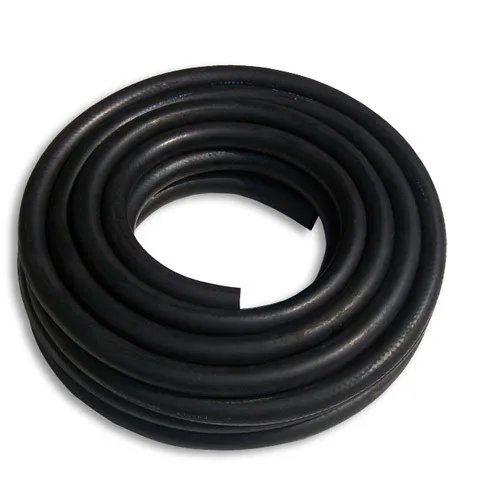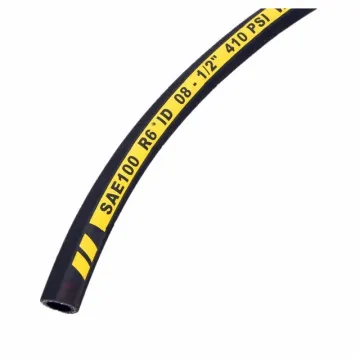
Top High Pressure Hose Suppliers for SAE 100 R4 Hydraulic Systems
When managing hydraulic systems, the efficiency of suction and return lines often determines the overall lifespan of the machinery. For professionals seeking reliable fluid transmission, selecting hoses that balance flexibility with rigorous pressure resistance is critical. The specific requirement for petroleum and water-based hydraulic fluids necessitates materials that prevent collapse under vacuum while maintaining integrity during low-pressure return cycles.
This technical guide explores the application of high-performance hoses that meet or exceed SAE 100 R4 requirements, focusing on how a reduced bend radius can optimize installation in tight industrial compartments. By understanding the intersection of material science and hydraulic standards, procurement managers can ensure system reliability and reduce maintenance downtime in heavy-duty environments.

Understanding SAE 100 R4 Standards and Enhanced Flexibility
The SAE 100 R4 standard provides a benchmark for hoses used in suction and return lines, ensuring they can handle the vacuum pressures typical of pump inlets. However, standard R4 hoses often pose installation challenges due to their rigidity. The advanced solution highlighted here utilizes a specialized construction that maintains the high-pressure ratings of the standard while significantly reducing the bend radius.
By using half the bend radius of a traditional SAE 100 R4 hose, operators can design more compact hydraulic circuits. This is particularly beneficial in mobile machinery, such as excavators or agricultural equipment, where space is limited. A tighter bend radius reduces the need for excessive hose length and minimizes the risk of kinking, which can restrict fluid flow and cause pump cavitation.
Key Technical Advantages:
- Vacuum Resistance: Engineered to prevent collapse in suction lines.
- Fluid Compatibility: Optimized for petroleum-based and water-base hydraulic fluids.
- Installation Efficiency: Reduced bend radius allows for streamlined routing in complex chassis.

Application Scenarios for Petroleum and Water-Base Fluids
The versatility of these hoses makes them indispensable across various industrial sectors. In petroleum-based systems, the inner tube must resist chemical degradation to prevent the hose from softening or leaking over time. Similarly, for water-based hydraulic fluids, moisture resistance is paramount to avoid internal corrosion or degradation of the reinforcement layers.
In suction lines, the primary challenge is the atmospheric pressure pushing against the hose wall when the pump creates a vacuum. A failure here leads to air ingress, which introduces bubbles into the system and drastically reduces volumetric efficiency. These hoses are specifically reinforced to withstand these negative pressures without compromising the inner diameter.
For return lines, the focus shifts to managing low-pressure surges and ensuring the fluid returns to the reservoir without turbulence. The ability to handle both functions with a single high-standard product simplifies inventory management for maintenance teams and ensures consistent performance across the entire hydraulic loop.
Critical Factors for Evaluating Hydraulic Hose Performance
When sourcing from high pressure hose suppliers, technical buyers must look beyond the nominal pressure rating. The relationship between the bend radius and the working pressure is a vital metric. A hose that can bend more sharply without collapsing under suction is a superior engineering product, as it reduces the stress on couplings and fittings.
Furthermore, the compatibility of the hose with different hydraulic fluids is non-negotiable. Using a hose not rated for petroleum-based fluids will result in rapid permeation and failure. Procurement teams should request detailed material compatibility charts and certification that the product meets or exceeds the SAE 100 R4 requirements.
Reliability in the field is also dependent on the quality of the fittings. A high-performance hose is only as strong as its connection point. Ensuring that the fittings are manufactured to match the hose's structural integrity prevents leaks at the crimp point, which is the most common failure site in hydraulic assemblies.
Technical Comparison: Standard R4 vs. Enhanced Flexibility Hose
| Feature | Standard SAE 100 R4 | Enhanced Flexibility Hose | Operational Impact |
|---|---|---|---|
| Bend Radius | Standard (100%) | Reduced (50%) | Easier Routing |
| Fluid Compatibility | Petroleum/Water-base | Petroleum/Water-base | Universal Application |
| Vacuum Stability | High | High (Exceeds R4) | Prevents Cavitation |
| Installation Space | Requires Large Loops | Compact Design | Space Optimization |
| Durability | Standard Industrial | High-Stress Rated | Longer Service Life |
Manufacturing Quality and Supply Chain Reliability
The production of industrial hoses requires strict adherence to quality control processes to ensure consistency across every meter of tubing. HEBEI ZHOUCONG focuses on a "reputation first" management tenet, ensuring that every batch of hydraulic and thermoplastic hoses undergoes rigorous inspection. This commitment to quality is essential for products destined for heavy-duty mining, agriculture, and industrial applications.
A robust supply chain allows for the provision of customized solutions. Whether it is adjusting the length, selecting specific fittings, or modifying the hose specifications for unique environments, the ability to provide professional, customized service distinguishes a manufacturer from a mere trader. With distribution centers and agents globally, the ability to deliver products fast and successfully is a core operational goal.
Quality assurance includes tracking the quality process strictly and dealing with objections quickly. By maintaining standards that are superior to domestic and international requirements, the goal is to meet and exceed customer expectations for durability and safety in high-pressure environments.
Future Trends in Hydraulic Hose Engineering
The industry is moving toward materials that offer higher thermal stability and lower permeation rates. As hydraulic systems become more complex and operate at higher temperatures, the demand for hoses that can maintain their flexibility without hardening is increasing. The integration of advanced polymers in the inner tube is allowing for better resistance to synthetic hydraulic fluids.
Additionally, there is a growing trend toward "smart" hose assemblies that can be tracked for service life. While the physical properties of the hose—like the reduced bend radius—remain the primary performance drivers, the way these products are managed in the field is evolving. Preventive maintenance based on actual usage data is replacing fixed-interval replacements.
For buyers, the focus will remain on finding partners who can provide certified solutions tailored to specific market standards, such as those required for the U.S. or European markets. The convergence of high-quality manufacturing and global distribution ensures that critical infrastructure remains operational with minimal risk of hydraulic failure.
Frequently Asked Questions About Hydraulic Suction Hoses
What does it mean to "exceed SAE 100 R4 requirements"?
It means the hose is designed to perform better than the minimum safety and performance benchmarks set by the SAE 100 R4 standard, often offering higher vacuum resistance or better flexibility while maintaining the same pressure ratings.
Can these hoses be used for both suction and return lines?
Yes, they are specifically recommended for petroleum and water-base hydraulic fluids in suction lines or in low-pressure return lines, making them versatile for various parts of the hydraulic circuit.
Why is a reduced bend radius important in hydraulic systems?
A reduced bend radius allows the hose to make tighter turns without kinking or collapsing. This is critical for installations in compact spaces and reduces the mechanical stress on the hose and its fittings.
Are these hoses compatible with water-based hydraulic fluids?
Yes, the material construction is engineered to be compatible with both petroleum-based and water-base hydraulic fluids, ensuring no internal degradation occurs during operation.
How do I choose the right fitting for a high-pressure suction hose?
You should choose fittings that are compatible with the hose's outer diameter and reinforced construction. It is recommended to use fittings from the same manufacturer to ensure the crimp specifications match the hose's structural needs.
What is the primary risk of using a non-reinforced hose in a suction line?
The primary risk is hose collapse. In a suction line, the pump creates a vacuum; if the hose is not reinforced (like an R4 rated hose), atmospheric pressure will crush the hose, blocking fluid flow and potentially damaging the pump.
Technical References and Industry Sources
- SAE International - Engineering Standards
- ISO - International Organization for Standardization
- Hydraulic News - Industry Technical Updates
- Fluid Power Society - Engineering Resources
Selecting the right hydraulic hose is a balance of technical specification and application reality. By prioritizing standards like SAE 100 R4 and seeking enhanced flexibility, you can ensure a more resilient and efficient system. Contact our technical team for customized hose and fitting solutions tailored to your specific operational requirements.
Related Industrial Hose Solutions