THE BUYER'S GUIDE / SELECTION
Choosing PVC Fiber Reinforced Hose: Medium, Dimensions and Operating Conditions
A practical buyer's guide to selecting the right PVC fiber reinforced hose based on the transfer medium, required dimensions and operating conditions. The guide explains what sets fiber reinforced PVC hose apart from other PVC hose types, outlines the core selection criteria procurement teams should evaluate, and identifies the product line offered by HEBEI ZHOUCONG IMP AND EXP CO.,LTD. through the Z-SMARTFLEX brand.

Transfer medium compatibility (air, water, chemicals, food and beverage, fertilizers/granular): the medium determines PVC compound suitability and whether braid or spiral reinforcement is required.
Working pressure and reinforcement architecture: polyester yarn braid for medium-pressure air and water duty; double-braid or steel reinforcement for higher pressures; spiral PVC helix for suction/vacuum applications.
Hose dimensions (inner diameter/bore, outer diameter, wall thickness, length): bore must match system fittings; OD and wall thickness affect fitting compatibility and pressure rating.
Operating temperature range: PVC performance degrades at elevated temperatures and stiffens in cold; verify the rated range for the installation environment.
Minimum bend radius and installation layout: routing constraints determine whether a specific construction or swivel fittings are needed to avoid kinking.
Application mode (suction, discharge or pressure): sustained negative pressure requires an anti-collapse spiral hose rather than a braided hose.
What Is a PVC Fiber Reinforced Hose?
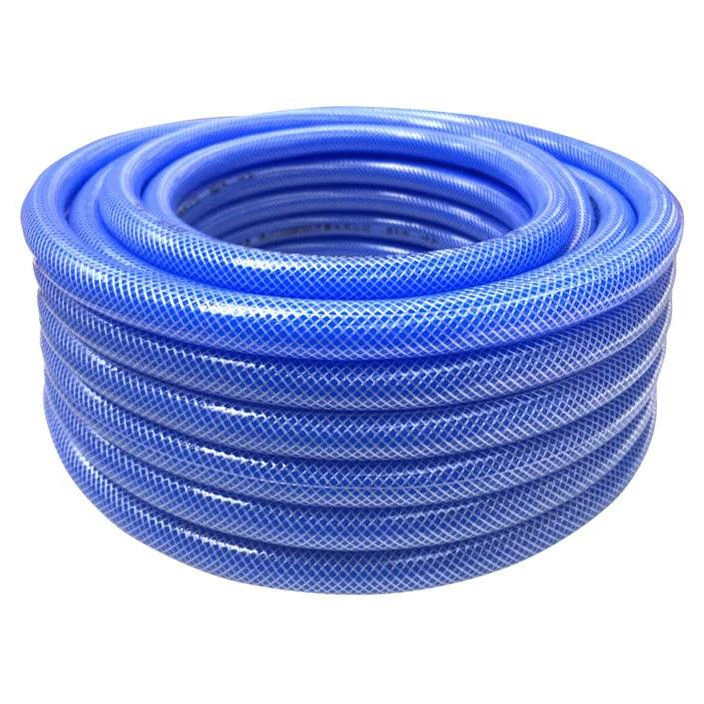
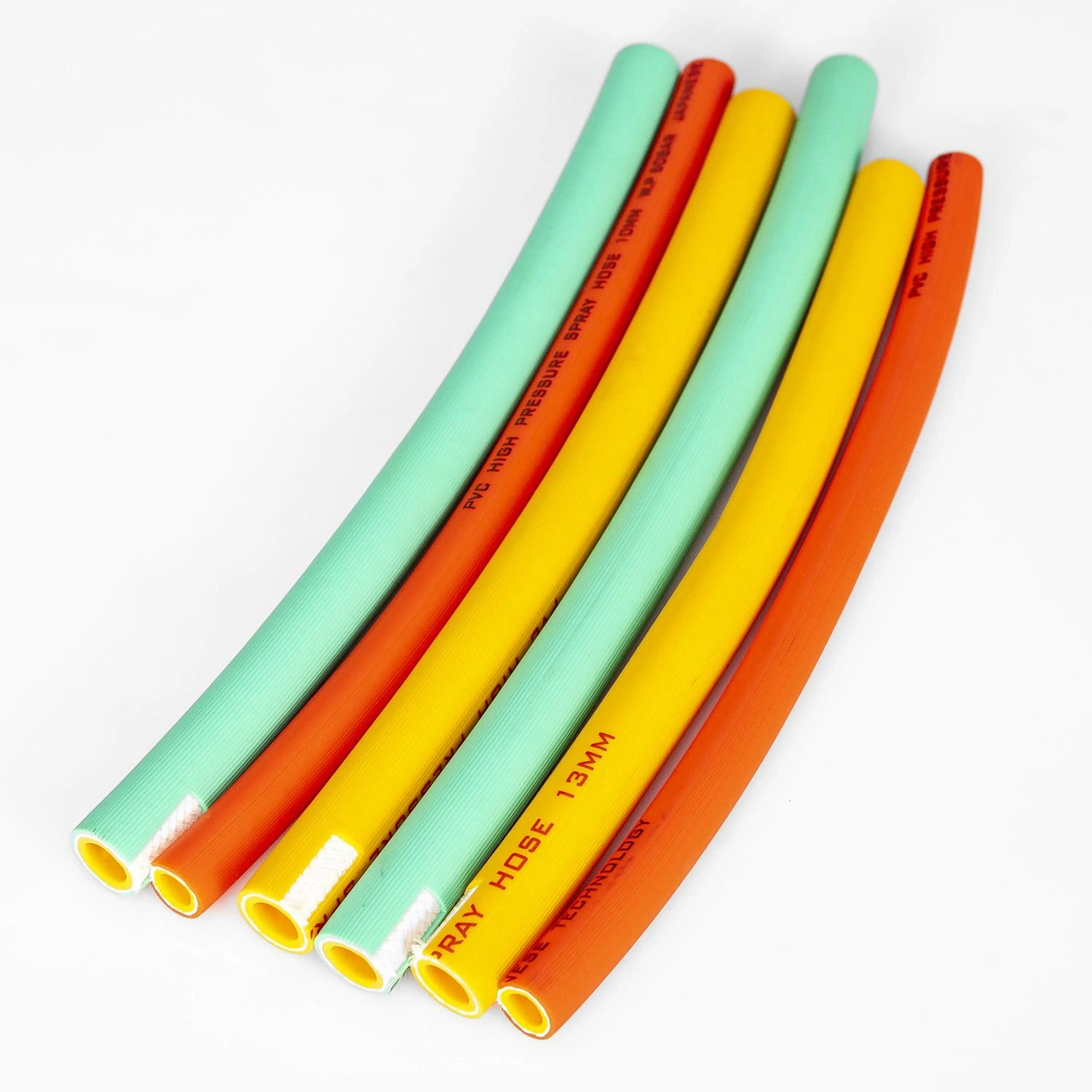
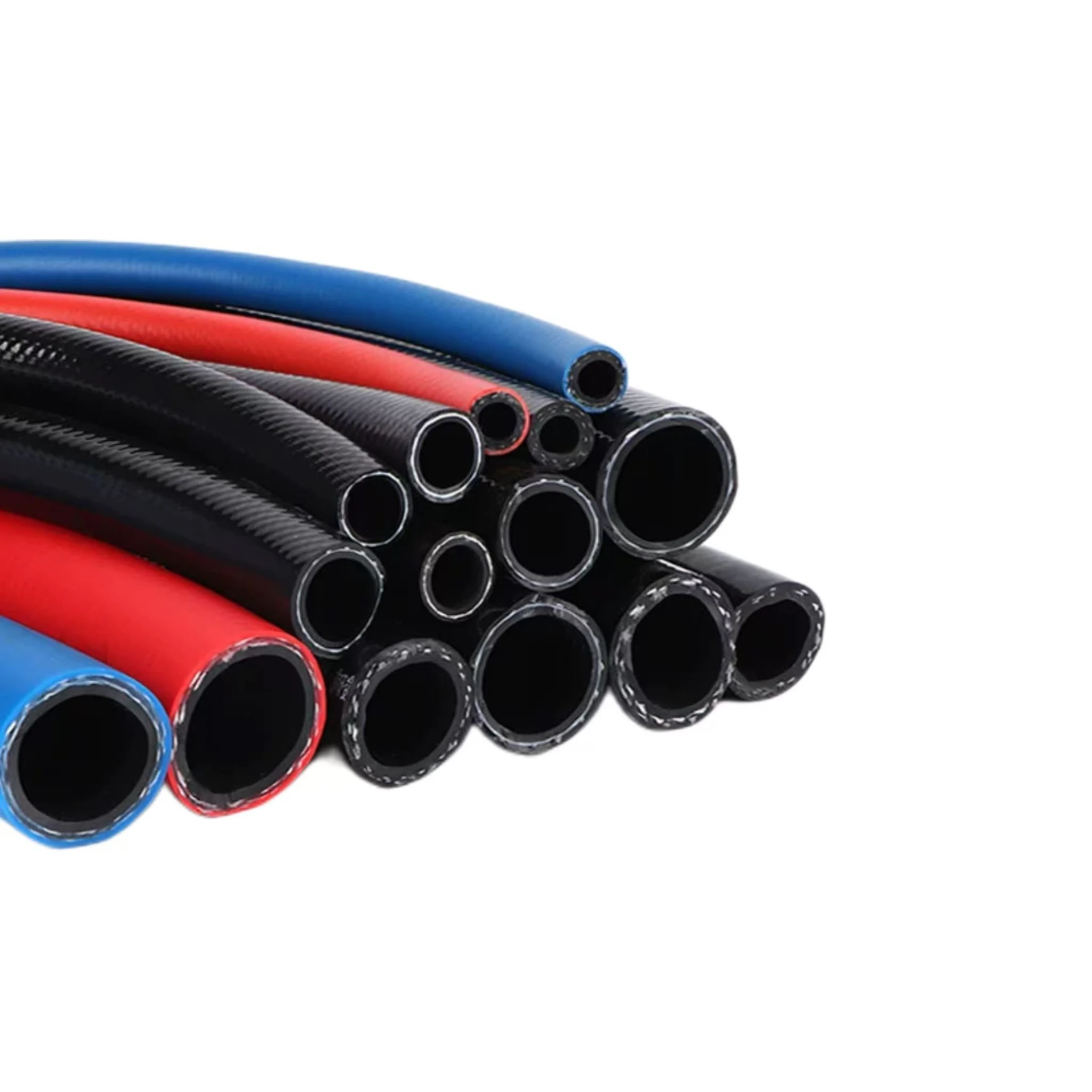
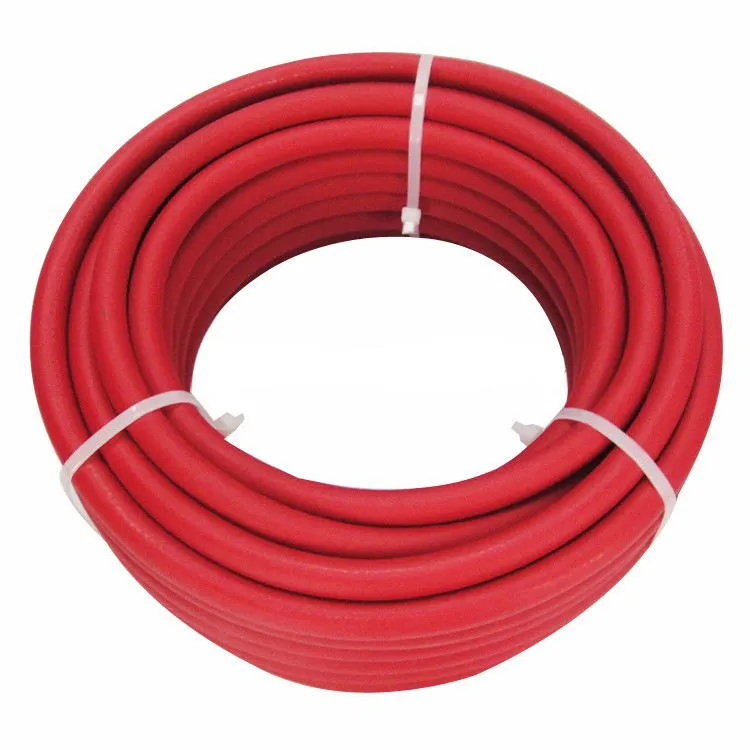
A PVC fiber reinforced hose is a flexible hose made from polyvinyl chloride (PVC) reinforced with a mesh of polyester yarn fiber, steel or other materials. The reinforcing layer is what distinguishes it from plain PVC tubing: the braid or mesh carries internal pressure, resists collapse under suction and prevents the hose wall from ballooning at higher working pressures. It is commonly used in industrial applications such as air and water delivery, chemical transfer, and food and beverage processing.
Understanding how the reinforcement type, hose dimensions and operating conditions interact is the first step toward choosing correctly.
Core Selection Criteria
1. Transfer Medium Compatibility
The medium flowing through the hose governs both the choice of PVC compound and the reinforcement material.
- Air and water delivery — Standard polyester-yarn-reinforced PVC handles compressed air lines and general water supply well. The braid resists the pressure pulses common in pneumatic circuits and pump discharge lines.
- Chemical transfer — The PVC formulation must be compatible with the chemical being conveyed. Confirm solvent resistance against the specific chemical before selecting. Reinforced hose improves pressure performance but does not by itself change the chemical resistance of the PVC compound.
- Food and beverage processing — Applications in this sector may require a non-toxic PVC grade. Check the product datasheet for the declared compound type before specifying.
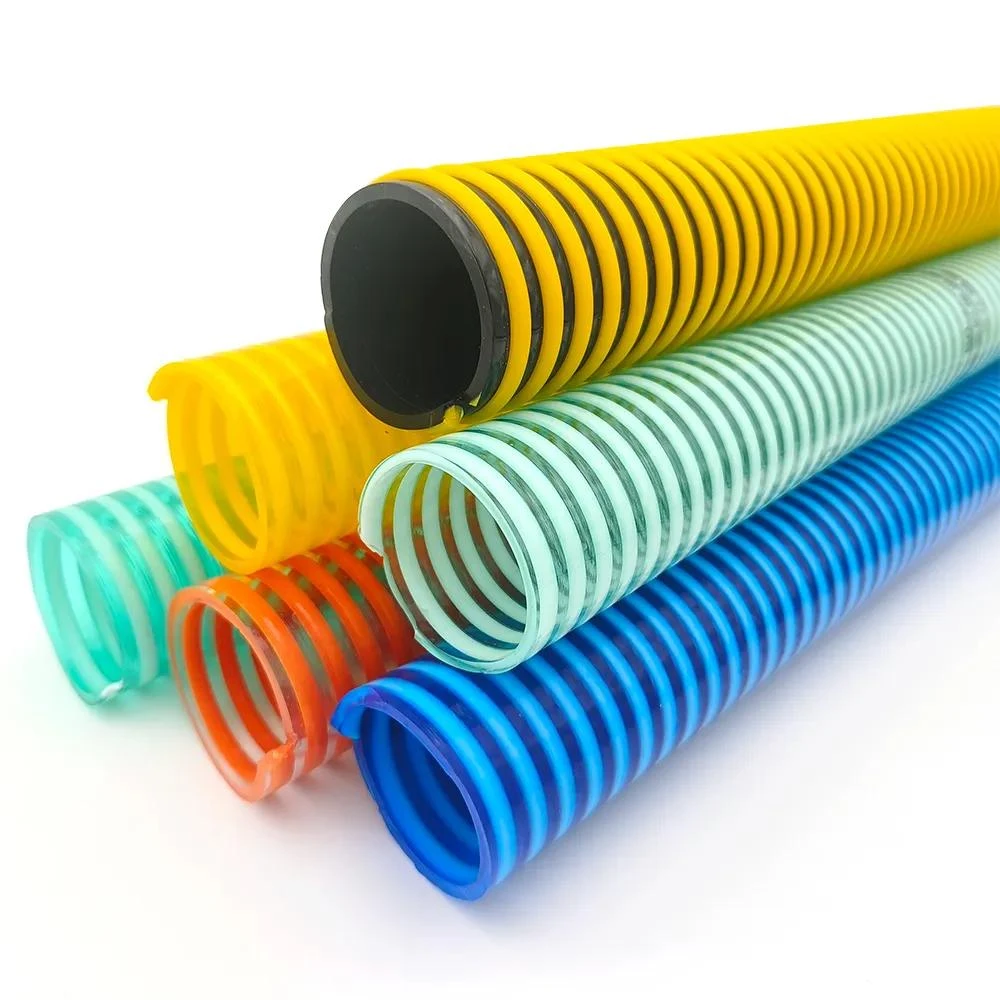
- Liquid fertilizers and granular materials — For suction-and-discharge applications involving fertilizers or granular media, a spiral-reinforced PVC suction hose (see the PVC Suction Hose in the product range) is more appropriate because the rigid helix specifically prevents collapse under vacuum, which a braid alone may not prevent.
2. Working Pressure and Reinforcement Architecture
The reinforcement architecture determines the maximum working pressure (WP) the hose can sustain safely.
- Polyester braid (tetoron/polyester yarn) — The most common architecture for medium-pressure applications. A single-braid construction suits water supply, irrigation feed lines and compressed air at typical industrial pressures. A double-braid or multi-layer construction raises the working pressure ceiling and is appropriate for more demanding pneumatic or hydraulic assist circuits.
- Steel wire reinforcement — Steel spiral or braid layers increase pressure capacity further and add kink resistance. Confirm the reinforcement type from the product specification before specifying for high-pressure duty.
- Spiral PVC reinforcement — Used primarily in suction hoses. The rigid helix maintains the bore under negative pressure (vacuum) rather than resisting internal positive pressure.
3. Hose Dimensions — Bore, OD and Length
Three dimensional parameters matter for procurement:
- Inner diameter (bore) — Sets the flow capacity. Match the bore to the system pipe or fitting size to avoid adaptor losses and connection leaks. Common bore sizes for fiber reinforced PVC hose cover a range from small tubing to larger industrial diameters; confirm the available range with the supplier.
- Outer diameter (OD) — Affects fitting compatibility and installation clearance. OD varies with wall thickness and reinforcement layer count, so always specify OD alongside bore when ordering.
- Wall thickness — Thicker walls improve pressure rating and crush resistance but add weight and reduce flexibility. For compressed air lines or equipment with tight bend radii, balance wall thickness against flexibility requirements.
- Hose length and reel options — Standard cut lengths and reel (drum) supply are both common. Confirm whether the supplier offers custom cut lengths to reduce on-site waste.
4. Temperature Range
PVC softens at elevated temperatures and stiffens in the cold. Both extremes affect pressure performance and handling.
- Verify the rated operating temperature range from the product datasheet for the specific application environment.
- For outdoor installations in climates with cold winters (common in the Middle East, Europe and North American markets), confirm low-temperature flexibility ratings so the hose does not crack during installation or use.
- Avoid continuous contact with hot surfaces or steam lines unless the product specification explicitly supports it.
5. Bend Radius and Installation Layout
The minimum bend radius of a hose limits how tightly it can be routed without kinking and blocking flow or damaging the reinforcement layer.
- Shorter bend radii suit equipment and machinery with confined routing spaces.
- Longer, straight runs with fewer bends allow a larger minimum bend radius, widening the choice of hose constructions.
- Where very tight bends are unavoidable, consider whether a swivel fitting or a specific hose construction recommended by the supplier is more appropriate.
Comparing Fiber Reinforced PVC Hose with Related PVC Hose Types
Fiber reinforcement is not the only PVC hose architecture. Buyers often need to decide between several types available from the same supplier:
| Hose Type | Reinforcement | Primary Use Case | Key Differentiator |
|---|---|---|---|
| PVC Fiber Reinforced Hose | Polyester yarn braid or mesh | Air & water delivery, chemical transfer, food & beverage | Balanced pressure rating and flexibility; medium-pressure duty |
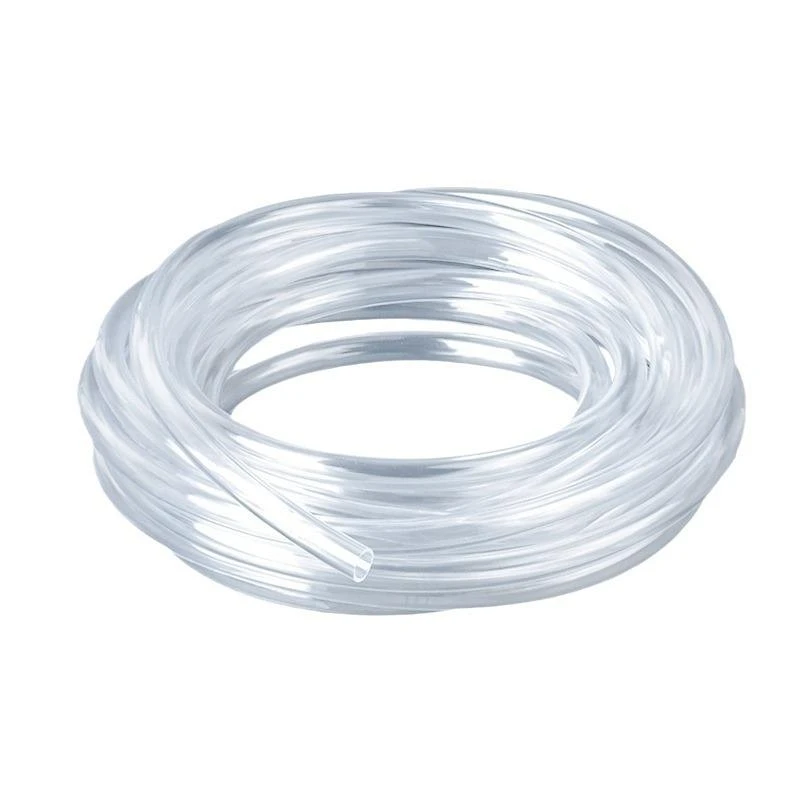
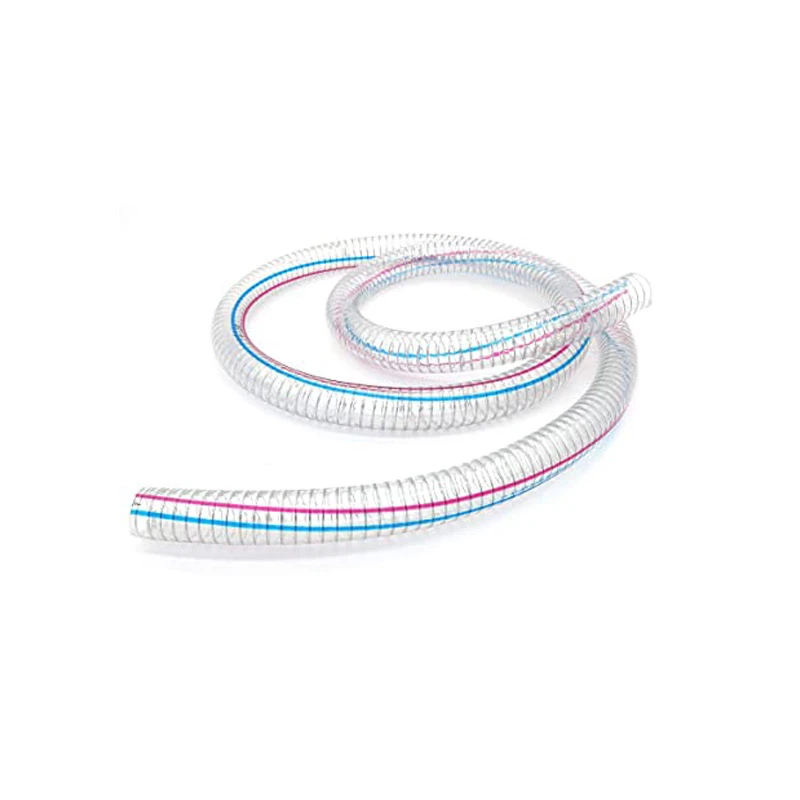
| PVC Clear Hose | Braided (transparent wall) | Visual flow monitoring of water and oils | Transparent wall enables inline flow inspection |
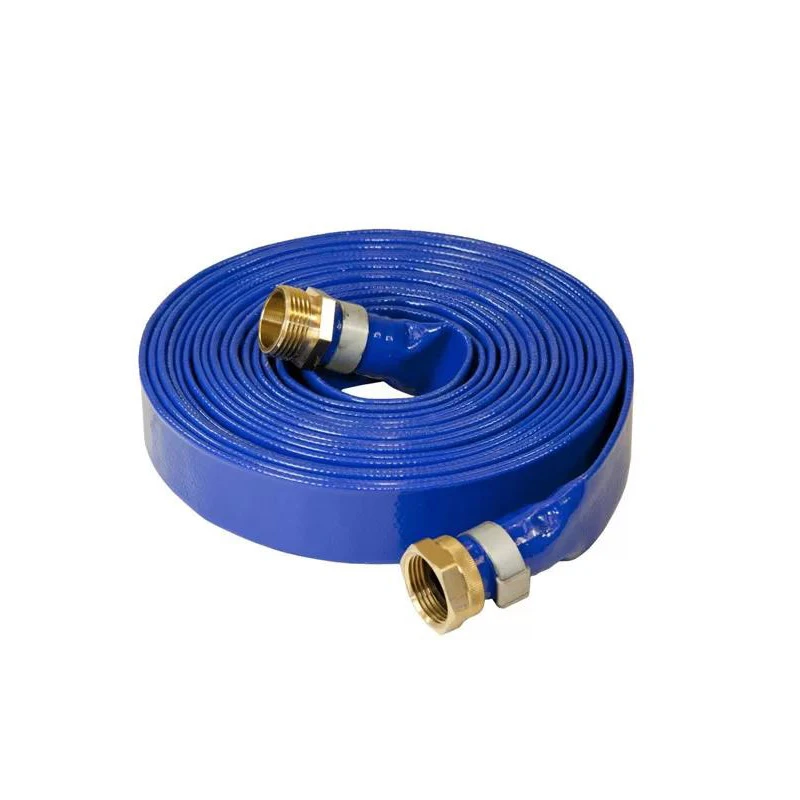
| PVC Layflat Hose | Polyester yarn | Agricultural irrigation, water pump discharge | Lays flat when empty; easy to store and deploy over long distances |
| PVC Suction Hose | Spiral PVC helix | Suction and discharge of liquid fertilizers, granular materials | Anti-collapse helix; maintains bore under vacuum |
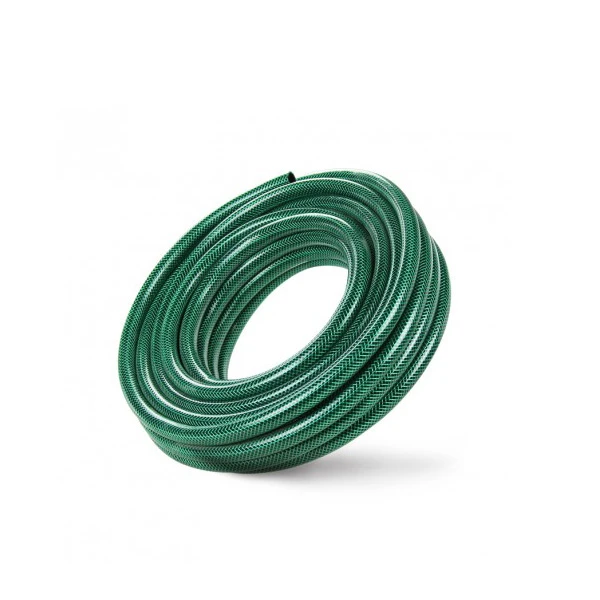
| PVC Garden Hose | PVC construction | Garden watering, general drainage | Lightweight; designed for low-pressure garden use |
This comparison is based on the product descriptions published by HEBEI ZHOUCONG IMP AND EXP CO.,LTD. (Z-SMARTFLEX). Choose PVC fiber reinforced hose when you need a robust, medium-pressure flexible line for industrial air, water or chemical duty. If the application demands vacuum suction, consider the suction hose; if visual inspection of flow is required, the clear braided hose is a better match; if portability over long distances matters, layflat hose is purpose-built for that role.
When PVC Fiber Reinforced Hose May Not Be the Right Choice
This hose type has documented limitations buyers should recognise:
- High-vacuum suction lines — Braided PVC hose is not designed to resist collapse under sustained negative pressure. Use a spiral-reinforced suction hose for those duties.
- Extreme temperatures — PVC is not suitable for steam service or for lines near furnaces or autoclaves. Confirm the rated temperature range before specifying.
- High-pressure hydraulic circuits — Where system pressure exceeds the confirmed WP of the fiber reinforced hose, a hydraulic rubber hose with steel wire reinforcement is the more appropriate choice.
- Aggressive solvents — Some solvents attack PVC. Verify chemical compatibility with the supplier before ordering.
Summary: Questions to Ask Before Ordering
When approaching a PVC hose supplier, have answers ready for the following:
- What medium is being conveyed, and at what concentration if chemical?
- What is the maximum system working pressure and test pressure?
- What bore, OD and wall thickness does the system require?
- What is the operating temperature range at the installation site?
- What is the tightest bend radius in the routing path?
- Is the application suction, discharge or both?
- Are food-grade or other material-compliance declarations required?
Having clear answers reduces the risk of ordering an undersized or incompatible hose and allows the supplier to confirm the most suitable product from their range.
HEBEI ZHOUCONG IMP AND EXP CO.,LTD. supplies PVC fiber reinforced hose and related PVC hose types under the Z-SMARTFLEX brand. Contact their team with your application requirements for product confirmation and specifications.
THE PEOPLE

About the author
THE COMPANY
HEBEI ZHOUCONG IMP AND EXP CO.,LTD.
Our goal is to be your best parterner,providing the best quality product,together with supplying the top 1 service.Our final mission is to make both our customers and us the mutral beneficial parties. Help the customers find the exact product.Deliver the product fast and successfully.Provide our professional,customized service. We’ve been working with Z-Smartflex, and their industrial hoses and hydraulic fittings have always been of consistent quality at competitive prices.…
About Us ↗Visit company website ↗YOUR NEXT STEP
Bring your brief. Start a useful conversation.
Use case, specification, quantity and delivery window: make the next conversation specific.
Z-Smartflex delivers superior-quality industrial hoses and fittings with global reliability, offering you durable solutions and exceptional service for all your fluid transfer needs.