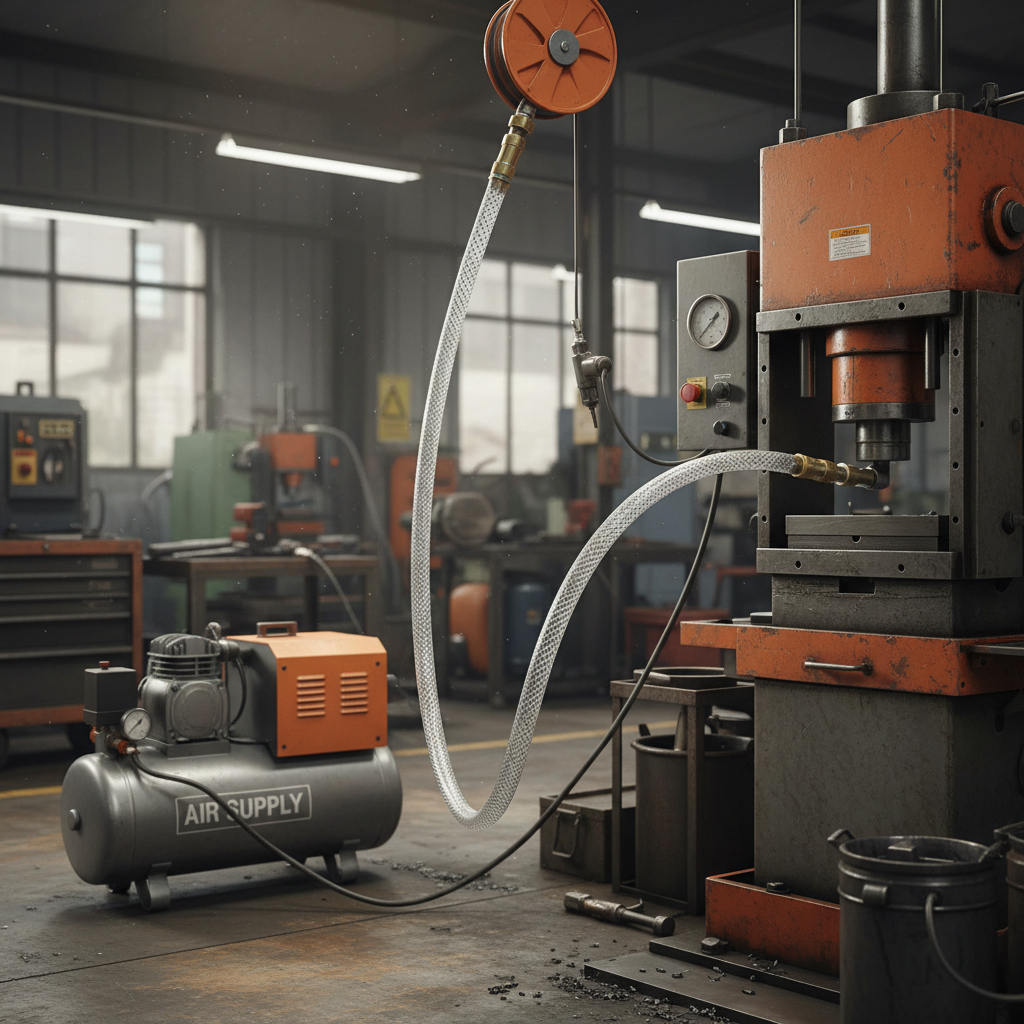
High pressure hose pipe suppliers provide critical conduits designed to transport fluids and gases under extreme stress, ensuring operational safety in hydraulic and industrial systems. These specialized components are engineered to withstand immense internal pressure while resisting external wear, making them indispensable for heavy machinery, aerospace, and manufacturing sectors.
Selecting the right supplier is not merely about procurement but about mitigating systemic risk. A failure in a high-pressure line can lead to catastrophic equipment damage or severe safety hazards, meaning that material certification and manufacturing precision are the primary benchmarks for quality in the rubber and plastics industry.
This guide provides a technical analysis of high-pressure hose selection, evaluating the critical performance metrics and procurement strategies necessary to ensure system longevity. Readers will gain insights into material compatibility, industry standards, and how to evaluate supplier capabilities effectively.

1Core Engineering of High Pressure Hoses

High-pressure hoses are complex composite structures typically consisting of three primary layers: the inner tube, the reinforcement layer, and the outer cover. The inner tube is selected based on chemical compatibility with the medium, while the reinforcement—often high-tensile steel wire or synthetic fibers—provides the structural integrity required to contain extreme pressures without expanding or rupturing.
The outer cover acts as the first line of defense against environmental degradation, protecting the inner layers from abrasion, UV radiation, and ozone. For those sourcing from high pressure hose pipe suppliers, understanding this anatomy is vital to ensure the hose is fit for the specific environmental stressors of the site.
Modern manufacturing processes, such as those utilized by HEBEI ZHOUCONG IMP AND EXP CO.,LTD., emphasize the seamless integration of these layers to prevent delamination, which is a common cause of premature hose failure in heavy-duty industrial settings.
2Critical Performance Parameters for Selection
When evaluating options from high pressure hose pipe suppliers, the "Working Pressure" (WP) and "Burst Pressure" are the most critical metrics. Working pressure is the maximum pressure a hose can safely handle during normal operation, while burst pressure is the point at which the hose fails. A standard safety factor, typically 4:1, is applied to ensure that the burst pressure is significantly higher than the maximum operating load.
Temperature range is another decisive factor. Extreme heat can degrade rubber compounds, causing them to harden and crack, while extreme cold can make the hose brittle. Specifying the minimum and maximum operating temperatures ensures that the polymer selected—whether PU, PVC, or specialized Rubber—remains flexible and leak-proof.
Additionally, the bend radius must be considered. A hose that is too rigid may kink or fatigue prematurely if the installation requires tight turns, leading to restricted flow and increased pressure spikes that can compromise the reinforcement layer.
3Industrial Applications and Use Cases
The versatility of high-pressure hosing allows it to be deployed across diverse sectors. In hydraulic systems for mining and construction, these hoses power excavators and loaders, where they must resist constant movement and high-pressure surges. In these environments, durability against external abrasion is as important as internal pressure resistance.
Agricultural applications often require a balance between pressure capability and chemical resistance, particularly when transporting fertilizers or pesticides. Industrial hose lines, including PVC and Rubber Water Hoses, are frequently used in large-scale irrigation and plant maintenance where reliability over long distances is key.
Furthermore, specialized silicone and oil-resistant hoses are critical in automotive and aerospace engineering, where fluid stability and high-temperature endurance are non-negotiable for safety and efficiency.
4Technical Performance Benchmarking
Analyzing the performance of high pressure hose pipe suppliers requires a data-driven approach. Key indicators include the rate of pressure loss over time, the number of flex cycles before fatigue failure, and the resistance to permeation. A superior hose maintains its structural integrity even when subjected to repeated pressure pulses.
Comparative data often shows that high-grade industrial hoses outperform generic alternatives in burst pressure margins and chemical stability. By optimizing the polymer blend and the tension of the steel braiding, premium suppliers can offer products that significantly extend the mean time between failures (MTBF).
high pressure hose pipe suppliers Performance Metrics
As indicated in the performance metrics, the integration of advanced manufacturing standards results in a marked increase in abrasion resistance and temperature tolerance, reducing the total cost of ownership by minimizing unplanned downtime and replacement frequency.
5Procurement Strategies and Quality Control
Successful procurement begins with a detailed specification sheet. Instead of requesting a generic "high pressure hose," buyers should specify the medium, peak pressure, temperature fluctuations, and environmental hazards. This precision prevents the common mistake of over-specifying (which adds unnecessary cost) or under-specifying (which leads to failure).
Evaluating the supplier's quality management system is equally important. Suppliers who adhere to strict factory control standards that exceed domestic requirements typically offer better consistency. Verification of certifications and a history of global distribution can indicate a supplier's ability to handle complex, large-scale orders.
Finally, the synergy between the hose and its fittings is a critical quality checkpoint. Ensuring that the couplings are compatible and properly crimped is essential, as the connection point is the most frequent site of high-pressure leaks.
6Emerging Trends in Hose Technology
The industry is shifting toward "smart" hosing and sustainable materials. There is an increasing demand for thermoplastic hoses that offer the strength of steel reinforcement but with significantly lower weight and better corrosion resistance. This trend is particularly evident in the aerospace and automotive sectors where weight reduction directly correlates to fuel efficiency.
Another development is the use of advanced nano-coatings on the outer cover to provide extreme resistance to oil and chemicals, further extending the lifespan of hoses in aggressive industrial environments. The move toward modular fitting systems also allows for faster field replacements and reduced installation errors.
Furthermore, suppliers are increasingly integrating digital tracking for maintenance, allowing operators to monitor the age and usage cycles of each hose segment to predict failure before it occurs, shifting from reactive to predictive maintenance.
7Comparative Analysis of Hose Materials
Choosing between different materials requires a trade-off analysis between cost, flexibility, and durability. While PVC hoses are cost-effective and lightweight, they lack the pressure capacity and temperature range of reinforced rubber or PU hoses. Conversely, silicone hoses offer exceptional heat resistance but may not withstand the same mechanical abrasion as synthetic rubber.
The following table compares common materials used by high pressure hose pipe suppliers to assist in technical selection based on operational needs.
| Material Type | Pressure Rating | Primary Strength | Typical Limitation |
|---|---|---|---|
| Reinforced Rubber | Very High | Extreme Durability | Higher Weight |
| PU (Polyurethane) | High | Abrasion Resistance | Temperature Sensitivity |
| PVC (Reinforced) | Medium | Cost Efficiency | Low Heat Tolerance |
| Silicone | Medium | Thermal Stability | Low Abrasion Resistance |
| Thermoplastic | High | Corrosion Resistance | Higher Initial Cost |
| Steel-Wire Braided | Ultra High | Burst Resistance | Reduced Flexibility |
Ultimately, the selection should be driven by the most restrictive variable in the operating environment—whether that is the chemical nature of the fluid, the peak pressure spikes, or the external ambient temperature.
Frequently Asked Questions
Conclusion
Selecting reliable high pressure hose pipe suppliers is a strategic decision that impacts both the operational efficiency and the safety of industrial systems. By focusing on technical specifications—such as the working pressure, material compatibility, and reinforcement type—procurement teams can ensure they obtain products that maximize uptime and minimize risk.
Whether you require specialized hydraulic hoses for heavy machinery or versatile industrial conduits, prioritizing quality standards and supplier expertise is essential. For those evaluating suitable solutions for their specific application, detailed product information and technical support are available at www.pvcrubberhose.com.