In the demanding world of industrial construction and material handling, the efficiency of transporting abrasive materials is paramount. The cement feeding hose pipe serves as a critical artery in this process, ensuring that cement and related powders are moved from silos to mixers without leakage or premature wear. Selecting the right hose is not merely a procurement decision but a strategic move to prevent costly downtime and maintain operational safety.
Globally, the construction sector is facing increasing pressure to accelerate project timelines while reducing waste. A high-performance cement feeding hose pipe mitigates the risk of blockages and bursts, which are common pain points in pneumatic conveying systems. By utilizing advanced polymer blends and reinforced layering, these hoses can withstand the intense internal friction caused by the high velocity of cement particles.
Understanding the technical nuances of these conduits—from abrasion resistance to vacuum stability—allows engineers to optimize their feeding systems for maximum throughput. This comprehensive guide explores the critical factors, global applications, and future innovations surrounding the cement feeding hose pipe, providing a roadmap for choosing the most reliable solution for your industrial needs.
Global Industry Context of Cement Feeding Hose Pipe
The global construction market continues to expand, driven by urbanization in Asia and infrastructure renewal in North America and Europe. Central to this growth is the efficient transport of bulk materials, where the cement feeding hose pipe plays a pivotal role. According to industry trends aligning with ISO standards for industrial hoses, the demand for high-abrasion-resistant materials has surged as plants move toward automated, high-pressure pneumatic systems.
However, the industry faces a recurring challenge: the inherent abrasiveness of cement particles. Traditional rubber hoses often fail prematurely due to internal scouring, leading to unplanned shutdowns and material leakage. This has pushed the market toward specialized rubber and composite hoses that can balance flexibility with an ultra-hard internal bore, reducing the total cost of ownership for large-scale concrete plants.
Definition and Technical Meaning
A cement feeding hose pipe is a specialized industrial conduit engineered to transport dry cement powder or wet cement slurries from storage units to processing equipment. Unlike standard water or air hoses, these are constructed with a heavy-duty inner liner designed specifically to resist the "sandblasting" effect caused by particles moving at high velocities.
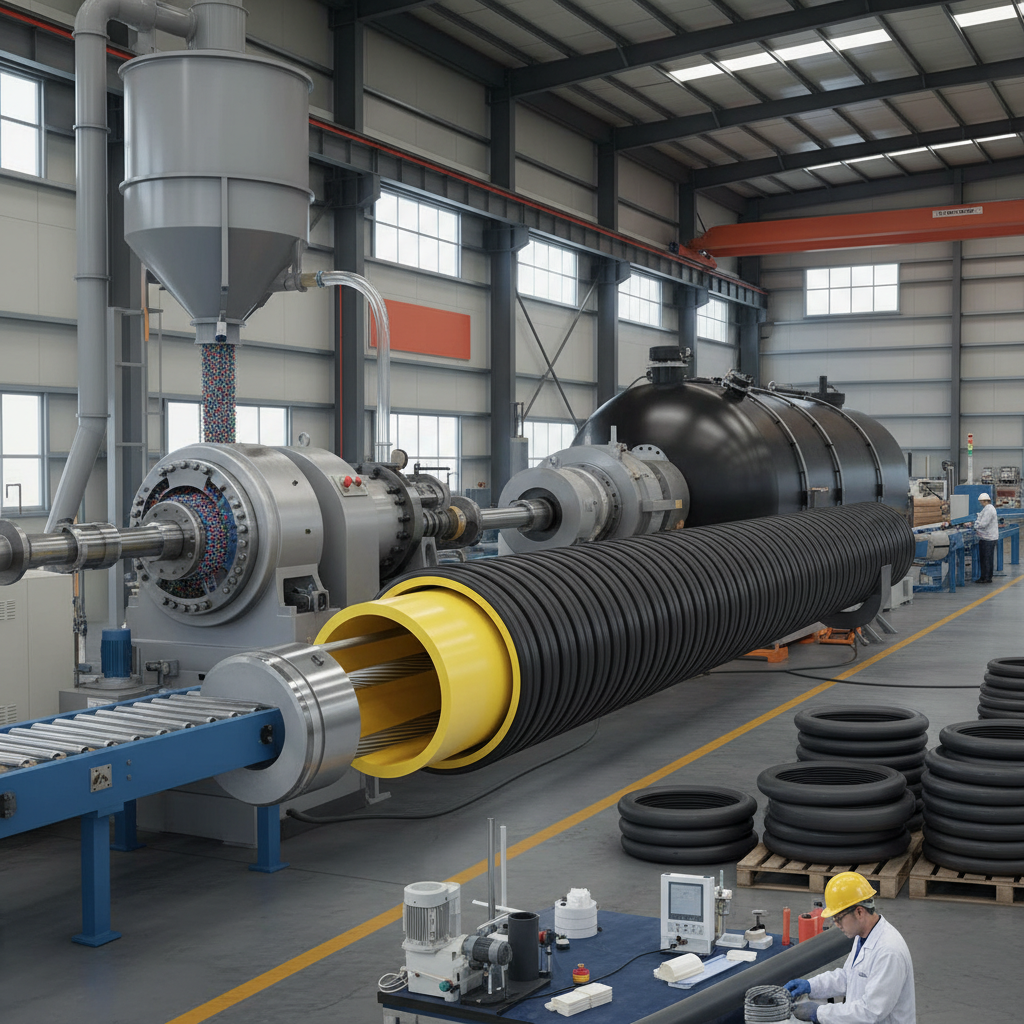
Technically, these hoses are typically multi-layered. They feature an abrasion-resistant inner tube, a high-tensile reinforcement layer (often made of synthetic textiles or steel wire), and a weather-resistant outer cover. This architecture ensures that the hose can handle the pressure surges associated with pneumatic pumping while remaining flexible enough to accommodate vibrations and layout changes.
In the context of modern industry, this component is the link between raw material storage and production. Its reliability directly impacts the consistency of the concrete mix and the overall safety of the worksite, as any rupture in a pressurized cement feeding hose pipe can create hazardous dust clouds and significant material waste.
Core Components and Durability Factors
The durability of a cement feeding hose pipe depends primarily on the material science of its inner liner. High-grade SBR (Styrene-Butadiene Rubber) or specialized polyurethane blends are often used to provide a low-friction surface that minimizes material buildup and resists the wearing action of cement crystals.
Reinforcement is the second critical factor. To prevent the cement feeding hose pipe from expanding or collapsing under vacuum or pressure, manufacturers embed high-density braided cords. This scalability in reinforcement allows the hose to be used in various pressure ratings, from low-pressure gravity feeds to high-pressure pneumatic transport.
Finally, the exterior cover must be engineered to withstand harsh environment exposure. Since cement plants are often dusty and exposed to UV radiation and chemicals, the outer layer of the cement feeding hose pipe is typically treated with ozone-resistant additives to prevent cracking and environmental degradation over time.
Global Applications and Real-World Use Cases
In real-world industrial settings, the cement feeding hose pipe is indispensable. In massive urban development projects across the Middle East, these hoses are used to connect mobile cement tankers to stationary mixing plants, ensuring a seamless flow of material even in extreme heat and sandy conditions.
Furthermore, in remote industrial zones or post-disaster relief operations where rapid infrastructure rebuilding is necessary, portable pneumatic conveying systems utilizing high-flexibility cement feeding hose pipe allow for the quick setup of concrete production hubs without the need for permanent piping.
Comparative Efficiency of Cement Feeding Hose Pipe Materials
Long-Term Value and Operational Advantages
Investing in a premium cement feeding hose pipe provides tangible economic benefits. The most immediate advantage is the reduction in maintenance frequency. By utilizing materials with superior abrasion resistance, plant managers can extend the replacement cycle from every few months to once a year, significantly slashing operational costs.
Beyond the financial aspect, there is a critical safety and reliability angle. A high-quality cement feeding hose pipe reduces the risk of catastrophic bursts, protecting workers from high-pressure releases and preventing the contamination of the surrounding environment with cement dust. This fosters a culture of trust and innovation within the facility.
Future Trends in Pneumatic Conveying Material
The future of the cement feeding hose pipe is leaning heavily toward "smart" materials and sustainability. We are seeing the emergence of nano-composite liners that offer almost zero friction, which allows pumps to operate at lower pressures, thereby reducing energy consumption across the entire feeding system.
Digital transformation is also playing a role. Some advanced systems are now integrating sensor-embedded hoses that can monitor wall thickness in real-time. These "intelligent" cement feeding hose pipe solutions can alert operators to wear and tear before a failure occurs, shifting maintenance from a reactive to a predictive model.
Furthermore, there is a growing push for eco-friendly polymers. The next generation of cement feeding hose pipe will likely incorporate recycled elastomers without sacrificing the industrial-grade strength required for heavy-duty cement transport, aligning with global green building certifications.
Common Challenges and Engineering Solutions
One of the most persistent challenges with cement feeding hose pipe usage is the phenomenon of "plugging" or material buildup. This occurs when moisture enters the line, causing the cement to hydrate and stick to the inner walls. To solve this, engineers are implementing electrostatic discharge (ESD) layers and smoother internal finishes to prevent material adhesion.
Another common issue is the failure of couplings and connection points. Because the cement feeding hose pipe is often subjected to constant movement and vibration, traditional clamps can loosen. The industry is moving toward integrated cam-lock fittings and reinforced crimping techniques to ensure a leak-proof seal.
Finally, balancing flexibility with pressure resistance remains a technical tightrope. Using hybrid reinforcement—combining textile braids with steel spirals—allows the cement feeding hose pipe to maintain its shape under high vacuum while still being easy for operators to maneuver around a crowded job site.
Technical Analysis of Cement Feeding Hose Pipe Material Specifications
|
Material Type
|
Abrasion Resistance (1-10)
|
Pressure Capacity
|
Expected Lifespan
|
| Standard Rubber |
4 |
Low to Medium |
3-6 Months |
| SBR Reinforced |
7 |
Medium to High |
8-12 Months |
| Polyurethane Lined |
9 |
High |
18-24 Months |
| PVC Composite |
5 |
Low |
4-8 Months |
| Steel-Wire Rubber |
8 |
Ultra High |
12-18 Months |
| Nano-Polymer Blend |
10 |
High |
24+ Months |
FAQS
For most high-volume industrial applications, a Polyurethane-lined or premium SBR rubber hose is recommended. Polyurethane offers the highest abrasion resistance, which is critical for the scouring effect of cement particles, while SBR provides a great balance of flexibility and durability. The choice depends on whether your priority is maximum lifespan or ease of movement.
Blockages are usually caused by moisture or low flow velocity. To prevent this, ensure the hose is kept dry and the pneumatic pressure is maintained above the material's critical saltation velocity. Additionally, using a hose with a smooth, low-friction inner liner reduces the areas where cement can accumulate and harden.
Yes, because they are engineered for the high abrasiveness of cement, these hoses are often excellent for transporting fly ash, silica sand, and other mineral powders. However, you should always verify that the chemical composition of the other powder is compatible with the hose's liner material to avoid chemical degradation.
Replacement intervals vary by material grade and usage intensity. Standard hoses may need replacing every 3-6 months, whereas premium reinforced hoses can last over a year. We recommend monthly visual inspections of the outer cover and periodic internal borescope checks to identify thinning walls before a rupture occurs.
Minor exterior scuffs can be patched, but any internal liner wear or punctures in the reinforcement layer should lead to an immediate replacement. Because these hoses often operate under pressure, a "patched" section can become a weak point that leads to a dangerous burst. Replacing the affected section or the entire hose is the safest practice.
Diameter selection depends on the required volume of cement transport and the capacity of your blower or pump. A diameter too small will increase friction and pressure, leading to faster wear; a diameter too large may cause the cement to settle and clog. Consult with your equipment manufacturer to match the hose ID to the system's airflow specifications.
Conclusion
The cement feeding hose pipe is far more than a simple connector; it is a critical engineering component that determines the efficiency, safety, and profitability of concrete production. From the selection of abrasion-resistant liners to the integration of high-tensile reinforcement, every detail contributes to the stability of the pneumatic conveying process. By prioritizing quality materials and predictive maintenance, operators can eliminate unplanned downtime and ensure a consistent flow of materials.
Looking forward, the transition toward smarter, more sustainable materials will continue to redefine the standards of industrial hoses. As the construction industry evolves toward automation and green energy, the adoption of nano-composite and eco-friendly cement feeding hose pipe solutions will be essential for staying competitive. We encourage plant managers to audit their current piping systems and upgrade to high-performance solutions to future-proof their operations. Visit our website for more professional solutions: www.pvcrubberhose.com