Selecting a fluid transfer system often comes down to a critical trade-off between flexibility and structural integrity. In high-pressure or vacuum-sensitive environments, standard PVC tubing frequently fails, leading to collapse or bursting that can halt entire production lines.
The integration of a steel wire helix into the PVC matrix transforms a simple conduit into a reinforced industrial tool capable of resisting external suction and internal pressure. This engineering shift is why procurement managers specifically seek steel wire reinforced pvc hose suppliers who can provide precise specifications for varying industrial stresses.
Understanding the technical nuances of these reinforced systems is essential for ensuring operational safety and longevity. This report examines the mechanical logic behind steel-reinforced PVC and provides a framework for evaluating supplier capabilities.


At its core, the reinforced PVC hose solves the problem of "ovalization" and vacuum collapse. By embedding a high-tensile steel wire in a helical pattern, the hose gains a skeletal structure that maintains its circular cross-section even under significant external pressure.
This mechanical reinforcement allows the hose to be used in suction applications where a standard PVC hose would simply flatten. The pitch and diameter of the steel wire determine the balance between the hose's flexibility and its crush resistance, making the manufacturing process a precise science of tension and extrusion.
The efficacy of a reinforced hose depends on the synergy between the PVC compound and the steel insert. High-quality PVC provides the chemical resistance and waterproof barrier, while the steel wire provides the structural rigidity. If the bonding between these two materials is weak, the wire can shift or migrate, leading to uneven wall thickness and potential points of failure.
Modern manufacturing employs co-extrusion techniques to ensure the steel wire is perfectly centered within the PVC wall. This centering is critical for maintaining a consistent flow rate and preventing turbulence within the hose. Furthermore, the use of plasticizers in the PVC mix must be carefully balanced to ensure the hose remains flexible at lower temperatures without sacrificing its long-term structural stability.
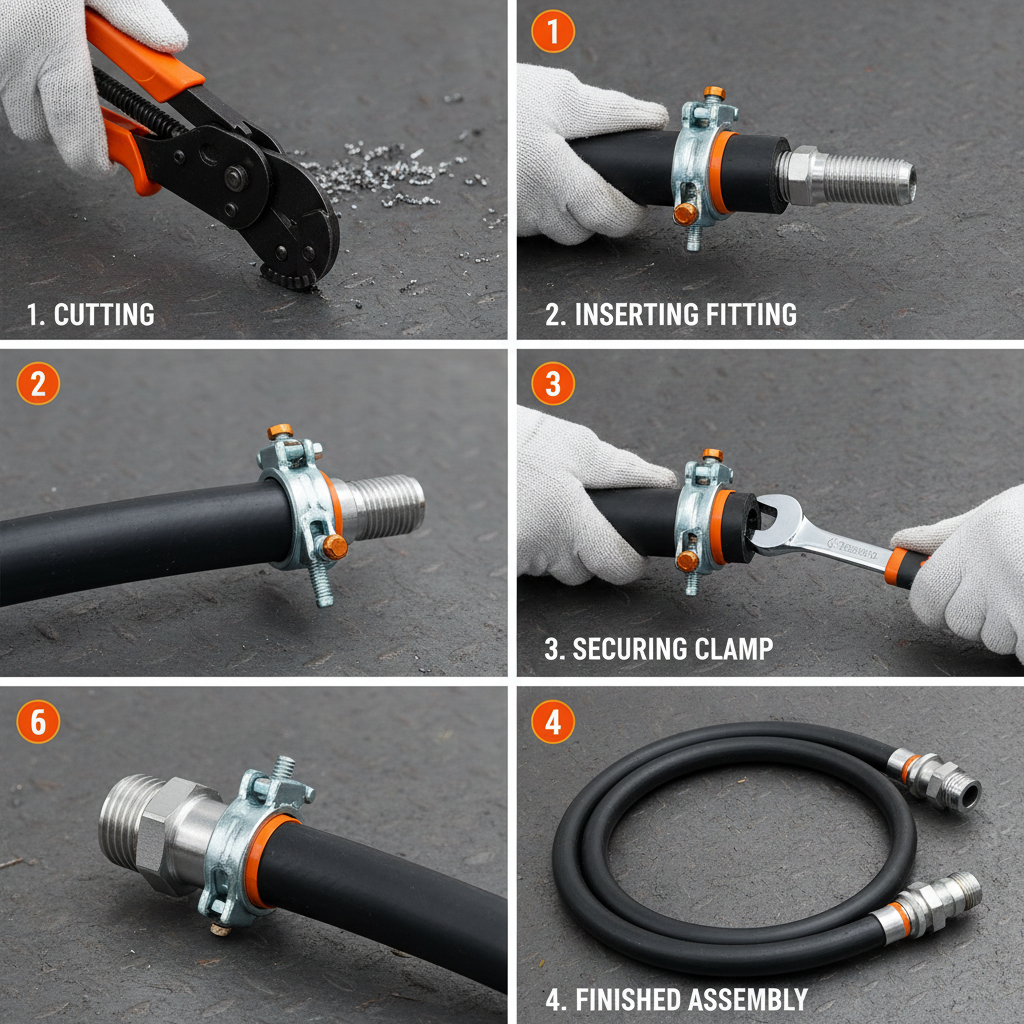
Beyond the primary wall, the termination points—the fittings—are where most failures occur. Using compatible hose fittings ensures that the transition from the flexible reinforced body to the rigid connection is seamless, preventing leaks and reducing the risk of the hose slipping off under pressure.
Evaluating the quality of reinforced hoses requires looking beyond the visual appearance. The primary metrics are the vacuum rating (the ability to resist collapse) and the working pressure (the ability to withstand internal force). These two factors are often inversely related to the hose's bend radius.
The critical failure point of a reinforced PVC hose is rarely the material itself, but rather the fatigue at the bend radius where the steel helix is subjected to the most significant mechanical stress during installation and operation.
To mitigate these risks, professional suppliers provide detailed technical data sheets specifying the maximum allowable curvature. Exceeding this limit can cause the steel wire to deform, permanently reducing the vacuum capacity of that section of the hose and creating a weak point susceptible to bursting.
Different industrial environments demand different reinforcement levels. While a standard steel-reinforced PVC hose is ideal for water and mild chemical transfer, more extreme applications may require specialized compounds. For instance, in aerospace or medical settings, silicone hoses are preferred for their thermal stability and biocompatibility, despite differing reinforcement methods.
The following index illustrates the relative performance of various hose types across five key industrial requirements. This helps in determining whether a steel-reinforced PVC solution is the most efficient choice for a specific operational need.
In a typical industrial setting, such as wastewater management or agricultural irrigation, these hoses are utilized for the suction of slurry or water from sumps. The steel reinforcement ensures that the pump can create a vacuum without the hose collapsing, which would otherwise cause the pump to cavitate and fail.
For manufacturers evaluating their supply chain, the focus is often on the "total cost of ownership." A cheaper hose that collapses after six months of use is far more expensive than a high-grade reinforced hose from established partners like HEBEI ZHOUCONG, whose Z-Smartflex line focuses on durability and precise fittings for heavy-duty applications.
The industry is moving toward "smart materials" where the reinforcement is not just a passive steel wire but a composite structure designed to optimize weight and strength. While steel remains the gold standard for suction, the introduction of thermoplastic elastomers (TPE) is beginning to challenge traditional PVC in specific niches.
However, the primary challenge remains the environmental impact of PVC and the corrosion of the internal steel wire. Future developments are focusing on polymer-coated steel wires to prevent oxidation and the use of recycled PVC compounds that maintain the same structural integrity as virgin materials.
As global regulations tighten around chemical usage in plastics, suppliers are forced to innovate with phthalate-free PVC compounds. This shift requires a redesign of the extrusion process to ensure the new compounds bond effectively with the steel reinforcement, maintaining the hose's vacuum rating.
When auditing steel wire reinforced pvc hose suppliers, procurement teams should look for transparency in the manufacturing process. A supplier that can provide batch-specific quality inspection reports and certified pressure test results is significantly more reliable than one providing generic product descriptions.
The ability to customize the steel wire pitch and the PVC wall thickness is another marker of a high-capability manufacturer. Standard "off-the-shelf" hoses may work for general use, but heavy-duty mining or chemical processing often requires tailor-made specifications to avoid premature failure.
The following table provides a decision framework for selecting the appropriate hose type based on operational constraints. This ensures that the chosen product aligns with the actual stress factors of the application.
| Operational Priority | Recommended Type | Key Constraint | Relative Durability |
|---|---|---|---|
| Vacuum Suction | Steel Wire PVC | Bend Radius | High |
| High Flexibility | PU / Silicone | Pressure Limit | Medium |
| Chemical Transfer | Specialty PVC | Material Compatibility | Medium |
| Extreme Temperature | Silicone Hose | Suction Strength | High |
| General Water Discharge | Standard PVC | External Pressure | Low |
| Heavy-Duty Mining | Heavy-Wall Steel PVC | Abrasive Wear | Very High |
The primary difference is structural stability under vacuum. Non-reinforced PVC hoses are suitable for gravity-fed or low-pressure discharge but will collapse when used for suction. Reinforced hoses feature an embedded steel wire helix that prevents the walls from caving in, allowing them to be used with pumps for suction tasks.
The bend radius is typically specified by the supplier based on the hose diameter and the steel wire's gauge. As a rule of thumb, a tighter bend increases mechanical stress on the steel helix, which can lead to deformation. Always refer to the technical data sheet to ensure the hose is not bent beyond its limit, which would compromise its suction capability.
It depends on the PVC compound. Standard PVC may degrade when exposed to certain petroleum-based oils. For oil transfer, you should specify "oil-resistant" PVC or opt for rubber oil hoses. Always verify the chemical compatibility of the PVC grade with the specific fluid being transported to avoid wall softening or leakage.
Corrosion typically occurs when the PVC outer layer is punctured or worn down, allowing moisture and oxygen to reach the steel helix. In highly corrosive environments, such as saltwater applications, the use of galvanized or polymer-coated steel reinforcement is recommended to extend the lifespan of the hose.
A thicker wall generally increases both the working pressure and the suction resistance. However, it also makes the hose stiffer and more difficult to maneuver. The optimal wall thickness is a balance between the required pressure rating and the flexibility needed for the specific installation layout.
Specialized suppliers provide technical certification and the ability to customize specifications. General vendors often sell "one-size-fits-all" products that may not meet the safety standards of heavy industrial use. A specialized partner can provide quality reports and ensure that the fittings are perfectly matched to the hose's reinforced structure.
The transition from basic tubing to steel wire reinforced PVC represents a critical engineering choice for any industrial operation involving vacuum or pressure. By prioritizing the synergy between high-grade polymers and precision-embedded steel, companies can significantly reduce downtime and improve the safety of their fluid transfer systems.
Ultimately, the value of a reinforcement system is only as good as the quality control behind it. Partnering with suppliers who emphasize technical transparency and customized engineering ensures that the hose remains a reliable component of the infrastructure rather than a frequent point of failure.